The textile industry has witnessed significant advancements in antimicrobial treatments, driven by growing consumer demand for hygienic and long-lasting fabric solutions. As bacteria and fungi continue to pose health risks in everyday environments, the development of durable antimicrobial textiles has become a focal point for researchers and manufacturers alike. Evaluating the persistence of these treatments requires a nuanced understanding of material science, application techniques, and real-world performance under varying conditions.
Understanding Antimicrobial Textiles
Antimicrobial textiles are fabrics treated with agents designed to inhibit the growth of microorganisms such as bacteria, mold, and mildew. These treatments serve dual purposes: preventing odor caused by bacterial breakdown of sweat and reducing the risk of infections transmitted through contaminated surfaces. The effectiveness of these treatments depends not only on their initial potency but also on their ability to withstand repeated washing, mechanical stress, and environmental exposure over time.
The challenge lies in creating antimicrobial properties that persist throughout the product's lifespan without compromising fabric comfort or triggering skin sensitivities. Traditional approaches using silver ions, triclosan, or quaternary ammonium compounds have shown varying degrees of success, with newer technologies like chitosan-based treatments and photocatalytic nanomaterials offering promising alternatives.
Testing Methodologies for Durability Assessment
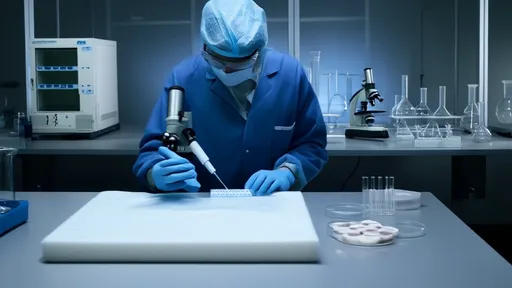
Standardized testing protocols have emerged to evaluate antimicrobial durability, though the field continues to evolve. Laboratory assessments typically involve accelerated aging tests that simulate years of use through controlled washing cycles, abrasion tests, and exposure to ultraviolet light. The American Association of Textile Chemists and Colorists (AATCC) and International Organization for Standardization (ISO) provide guidelines for these evaluations, but researchers often supplement these with real-world wear trials for comprehensive data.
One critical aspect of durability testing involves measuring the minimum inhibitory concentration (MIC) required to maintain effectiveness after multiple wash cycles. This determines whether the antimicrobial agent remains at sufficient levels to prevent microbial growth. Advanced analytical techniques such as scanning electron microscopy and energy-dispersive X-ray spectroscopy help visualize the distribution and retention of active compounds within textile fibers.
The Role of Fabric Composition in Treatment Longevity
Textile substrates play a crucial role in determining how well antimicrobial treatments adhere and persist. Natural fibers like cotton and wool present different binding challenges compared to synthetic materials such as polyester or nylon. Hydrophilic fibers tend to retain certain antimicrobial agents better than hydrophobic ones, though chemical modifications can improve adhesion in synthetics.
Innovative application methods, including microencapsulation and plasma-assisted deposition, have shown potential for enhancing treatment durability. These techniques create protective barriers around active ingredients or embed them deeper within fiber structures, slowing their release and protecting them from mechanical and chemical degradation during laundering.
Environmental and Usage Factors Affecting Performance
Real-world conditions present variables that laboratory tests can't fully replicate. Factors such as water hardness, detergent composition, washing machine agitation, and drying methods all influence treatment longevity. The pH of sweat, exposure to sunlight, and mechanical friction from daily wear contribute to the gradual breakdown of antimicrobial properties.
Climate also plays a significant role. Fabrics used in humid environments face greater microbial challenges than those in arid regions, potentially accelerating the depletion of antimicrobial agents. Understanding these variables helps manufacturers tailor treatments for specific applications, whether for athletic wear, medical textiles, or everyday apparel.
Emerging Technologies in Persistent Antimicrobial Protection
Recent developments focus on creating self-regenerating antimicrobial surfaces and stimuli-responsive treatments that activate only when needed. Photocatalytic materials like titanium dioxide generate reactive oxygen species when exposed to light, providing ongoing protection without depleting finite reservoirs of antimicrobial agents.
Another promising avenue involves incorporating antimicrobial properties at the polymer level during fiber production, rather than applying surface treatments. This approach, known as intrinsic modification, can offer more uniform distribution and potentially longer-lasting effects, though it presents challenges in terms of cost and production scalability.
Regulatory Considerations and Safety Profiles
As antimicrobial textiles gain popularity, regulatory bodies have increased scrutiny regarding their long-term safety and environmental impact. Concerns about microbial resistance and chemical leaching have prompted stricter guidelines for product claims and biodegradability. The European Chemicals Agency (ECHA) and Environmental Protection Agency (EPA) now require comprehensive data on treatment persistence and potential ecological effects.
Manufacturers must balance efficacy with safety, ensuring that durable antimicrobial properties don't come at the cost of releasing harmful substances into waterways during laundering or causing skin irritation with prolonged contact. This has led to increased interest in bio-based antimicrobials and physical rather than chemical antimicrobial mechanisms.
Consumer Expectations and Market Realities
The disconnect between consumer expectations and technical realities presents an ongoing challenge. Many buyers assume antimicrobial treatments should last indefinitely, while in practice, even the most durable solutions experience gradual diminishment. Clear communication about expected lifespan and proper care instructions becomes crucial for maintaining customer satisfaction.
Market segmentation has emerged, with different durability standards for disposable medical textiles versus premium sportswear meant to last several years. This specialization allows for more targeted research and development, with treatments optimized for specific use cases rather than attempting a one-size-fits-all solution.
Future Directions in Durability Enhancement
Ongoing research explores hybrid systems combining multiple antimicrobial mechanisms to create synergistic effects and redundancy. For instance, pairing silver nanoparticles with natural antimicrobial compounds may provide broader spectrum protection while reducing the risk of resistance development.
Smart textiles incorporating sensors to monitor antimicrobial activity represent another frontier. These could indicate when treatments require renewal or when microbial loads reach concerning levels, adding a functional dimension to durability assessment. As nanotechnology and biotechnology advance, the potential for truly long-lasting antimicrobial textiles continues to grow.
The pursuit of durable antimicrobial textiles remains a dynamic field requiring collaboration between chemists, textile engineers, microbiologists, and environmental scientists. As testing methodologies become more sophisticated and treatment technologies more advanced, the industry moves closer to creating fabrics that maintain their protective qualities throughout their usable life while meeting increasingly stringent safety and sustainability standards.

By /Jul 21, 2025

By /Jul 21, 2025
By /Jul 21, 2025

By /Jul 21, 2025

By /Jul 21, 2025

By /Jul 21, 2025

By /Jul 21, 2025
By /Jul 21, 2025

By /Jul 21, 2025
By /Jul 21, 2025
By /Jul 21, 2025

By /Jul 21, 2025
By /Jul 21, 2025

By /Jul 21, 2025

By /Jul 21, 2025

By /Jul 21, 2025
By /Jul 21, 2025
By /Jul 21, 2025
By /Jul 21, 2025
By /Jul 21, 2025
