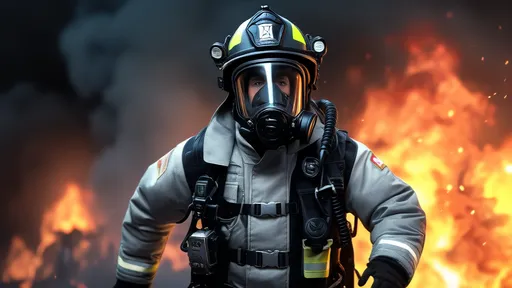
The evolution of thermal stress protection gear for firefighters has been a critical yet often overlooked aspect of modern firefighting. Over the decades, advancements in materials science, ergonomic design, and physiological understanding have transformed bulky, heat-retentive uniforms into sophisticated life-saving systems. These innovations haven't just improved comfort—they've redefined survivability in extreme environments where seconds determine outcomes.
Early firefighting gear prioritized basic flame resistance over heat dissipation, creating dangerous internal microclimates. Traditional turnout coats, while effective against direct flame contact, trapped metabolic heat and steam from sweat evaporation. This paradox left firefighters protected from external fires but vulnerable to heatstroke and cardiovascular strain. The tragic incidents of firefighters collapsing post-fire, sometimes hours after leaving the scene, forced a reevaluation of what true protection meant.
Phase-change materials marked the first genuine breakthrough, with vests containing temperature-regulating crystals that absorbed excess body heat. These wearable heat sinks bought precious time during interior attacks, but their finite capacity and added weight revealed limitations. Researchers then turned to active cooling systems, experimenting with everything from compressed air vortex tubes to miniature liquid circulation networks resembling space suits. The current generation integrates moisture-wicking aerogels with passive ventilation channels that respond dynamically to movement and heat exposure.
The most revolutionary development emerged from military aerospace technology—sweat amplification systems that enhance the body's natural cooling mechanism. By combining hydrophobic membranes with capillary action textiles, these suits can double evaporative cooling efficiency without compromising waterproofing. Some prototype helmets now incorporate thermoelectric cooling powered by kinetic energy from head movements, addressing the critical issue of brain temperature regulation during prolonged exposure.
Future iterations are exploring biometric integration, with smart textiles that monitor core temperature and selectively activate cooling zones. These systems communicate with incident commanders' dashboards, providing real-time physiological status updates. Another frontier involves self-repairing nanomaterials that seal minor breaches automatically—a feature particularly valuable in wildfire scenarios where ember showers degrade conventional gear.
What began as simple heat shielding has evolved into a sophisticated interface between human physiology and extreme environments. Each technological leap reflects deeper understanding of how heat stress impacts decision-making and endurance. The next generation of thermal protection won't just defend against heat—it will actively collaborate with the wearer's biology to extend safe operational limits in ways previously unimaginable.

By /Jul 21, 2025

By /Jul 21, 2025

By /Jul 21, 2025

By /Jul 21, 2025

By /Jul 21, 2025

By /Jul 21, 2025

By /Jul 21, 2025

By /Jul 21, 2025

By /Jul 21, 2025

By /Jul 21, 2025
By /Jul 21, 2025

By /Jul 21, 2025

By /Jul 21, 2025

By /Jul 21, 2025

By /Jul 21, 2025

By /Jul 21, 2025
By /Jul 21, 2025

By /Jul 21, 2025

By /Jul 21, 2025
By /Jul 21, 2025
