The human brain is wired to seek immediate rewards, yet our ability to delay gratification plays a pivotal role in long-term success. At the core of this behavioral paradox lies a complex neural reward system that governs our choices between short-term pleasure and future benefits. Understanding how the brain processes delayed rewards reveals why some individuals excel at self-control while others struggle.
The Neurobiology of Instant vs. Delayed Gratification
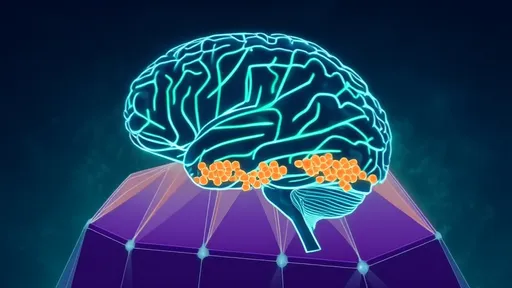
When faced with a tempting immediate reward, the limbic system—particularly the nucleus accumbens—lights up with dopamine activity. This primitive neural circuitry evolved to prioritize survival needs, creating an almost irresistible pull toward instant rewards. However, functional MRI studies show that when individuals choose delayed gratification, the prefrontal cortex engages in a delicate dance with these reward centers. The dorsolateral prefrontal cortex acts as a regulatory brake, projecting cognitive control over impulsive urges while the ventromedial prefrontal cortex assigns value to future outcomes.
This neural tug-of-war explains why children who performed well on the classic Marshmallow Test demonstrated thicker prefrontal cortex development in later brain scans. The ability to suppress automatic responses in favor of delayed rewards correlates with structural differences in white matter connectivity between control and valuation regions. Neurochemical research further reveals that serotonin modulates this system, influencing patience thresholds through its effects on impulse regulation.
The Temporal Discounting Phenomenon
Economists and neuroscientists describe our tendency to devalue future rewards as temporal discounting—a quantifiable neural process rather than mere lack of willpower. Sophisticated decision-making experiments demonstrate that the subjective value of a reward follows a hyperbolic decay curve the longer its delivery is postponed. Intriguingly, this discounting rate varies dramatically between individuals and predicts real-world outcomes from academic achievement to addiction vulnerability.
Cutting-edge research using intracranial recordings reveals that specific neuronal populations in the anterior cingulate cortex fire differentially when coding for immediate versus delayed rewards. These "time-sensitive" neurons appear to integrate both reward magnitude and delay duration, creating a biological algorithm for intertemporal choice. Disruptions in this system, whether through fatigue, stress or neurological conditions, can shift the balance toward impulsive decisions regardless of conscious intentions.
Neuroplasticity and Trainable Willpower
Contrary to the outdated notion that self-control is a fixed trait, contemporary neuroscience demonstrates the remarkable plasticity of reward circuitry. Regular practice with delayed gratification tasks physically reshapes neural networks—a finding with profound implications for education and behavioral therapy. Mindfulness meditation, cognitive reframing techniques, and environmental "pre-commitment" strategies all show measurable impacts on brain activation patterns during delay-of-gratification scenarios.
Clinical applications are already emerging from this research. Neuromodulation techniques like transcranial magnetic stimulation applied to the prefrontal cortex have helped treatment-resistant addicts regain control over impulsive behaviors. Similarly, children with ADHD who undergo neurofeedback training show improved delayed gratification capacity alongside normalized brain wave patterns. These interventions work not by suppressing the reward system but by enhancing its integration with executive control networks.
The Evolutionary Paradox of Delayed Rewards
From an evolutionary standpoint, the neural mechanisms enabling delayed gratification present an intriguing paradox. While most animals strongly prefer immediate rewards, humans developed unprecedented capacity for long-term planning—a cognitive leap tied to brain expansion and social complexity. Anthropological evidence suggests this ability co-evolved with tool use, cooperative hunting, and agricultural practices where current effort yielded distant payoffs.
Modern neuroimaging studies of traditional hunter-gatherer communities reveal cultural differences in temporal discounting rates that correlate with subsistence strategies. Groups relying on delayed-return economies (like crop cultivation) exhibit distinct activation patterns in valuation networks compared to immediate-return foragers. This cultural neuroscience perspective underscores how environment and lifestyle shape the very architecture of our reward systems across generations.
Technological Impacts on Neural Reward Processing
The digital age has introduced unprecedented challenges to our evolved capacity for delay. Constant notifications, infinite scrolling, and one-click purchases create an environment of perpetual instant gratification that may be rewiring neural circuits. Emerging research on "digital distraction" shows decreased grey matter density in impulse control regions among heavy media multitaskers, along with altered dopamine receptor availability.
Neuroscientists warn that habitual exposure to hyper-stimulating digital rewards may recalibrate the brain's natural delay mechanisms, making ordinary paced rewards feel unsatisfactory. However, some researchers propose leveraging technology to retrain delayed gratification through gamified cognitive training apps that gradually extend reward intervals. These tools use the brain's inherent plasticity to strengthen top-down control pathways, essentially making patience more neurologically rewarding.
As research continues to unravel the intricate dance between immediate desires and long-term planning, one truth becomes clear: our ability to delay gratification stems not from moral fortitude but from the sophisticated interplay of evolved neural systems. Harnessing this knowledge offers promising pathways for enhancing decision-making, mental health, and societal wellbeing in an increasingly instant-access world.

By /Jul 21, 2025

By /Jul 21, 2025
By /Jul 21, 2025

By /Jul 21, 2025

By /Jul 21, 2025

By /Jul 21, 2025

By /Jul 21, 2025
By /Jul 21, 2025

By /Jul 21, 2025

By /Jul 21, 2025

By /Jul 21, 2025

By /Jul 21, 2025

By /Jul 21, 2025

By /Jul 21, 2025
By /Jul 21, 2025

By /Jul 21, 2025

By /Jul 21, 2025

By /Jul 21, 2025
By /Jul 21, 2025

By /Jul 21, 2025
